Glasgow
Mapped
Variants
Layers
Five real places, not five shapes
Each mark is drawn from what's actually on the ground; a street pattern, a park edge, a rail line. Here's the city each one is standing in for.
The city itself
Before the five districts, one city; briefly, and factually.
Glasgow is Scotland's largest city and the UK's third-largest, with around 650,000 people inside the city boundary. Its dialect, spoken by Glaswegians, sometimes "Weegies", is considered a distinct form of Scots.
In the 19th century the city called itself the "Second City of the Empire": by 1901 its population had passed 761,000, and by the 1870s the Clyde produced more than half of Britain's shipping tonnage, building close to a fifth of the world's ships at its peak. The tenements built to house that workforce still form most of the city's residential streets today.
Population fell for decades after a 1950 peak of 1.089 million, as slum clearance moved people to new towns outside the city. It's been rising again since the 2010s; the city centre's own residential population grew by a third between 2011 and 2022, with a council target of 40,000 residents there by 2035.
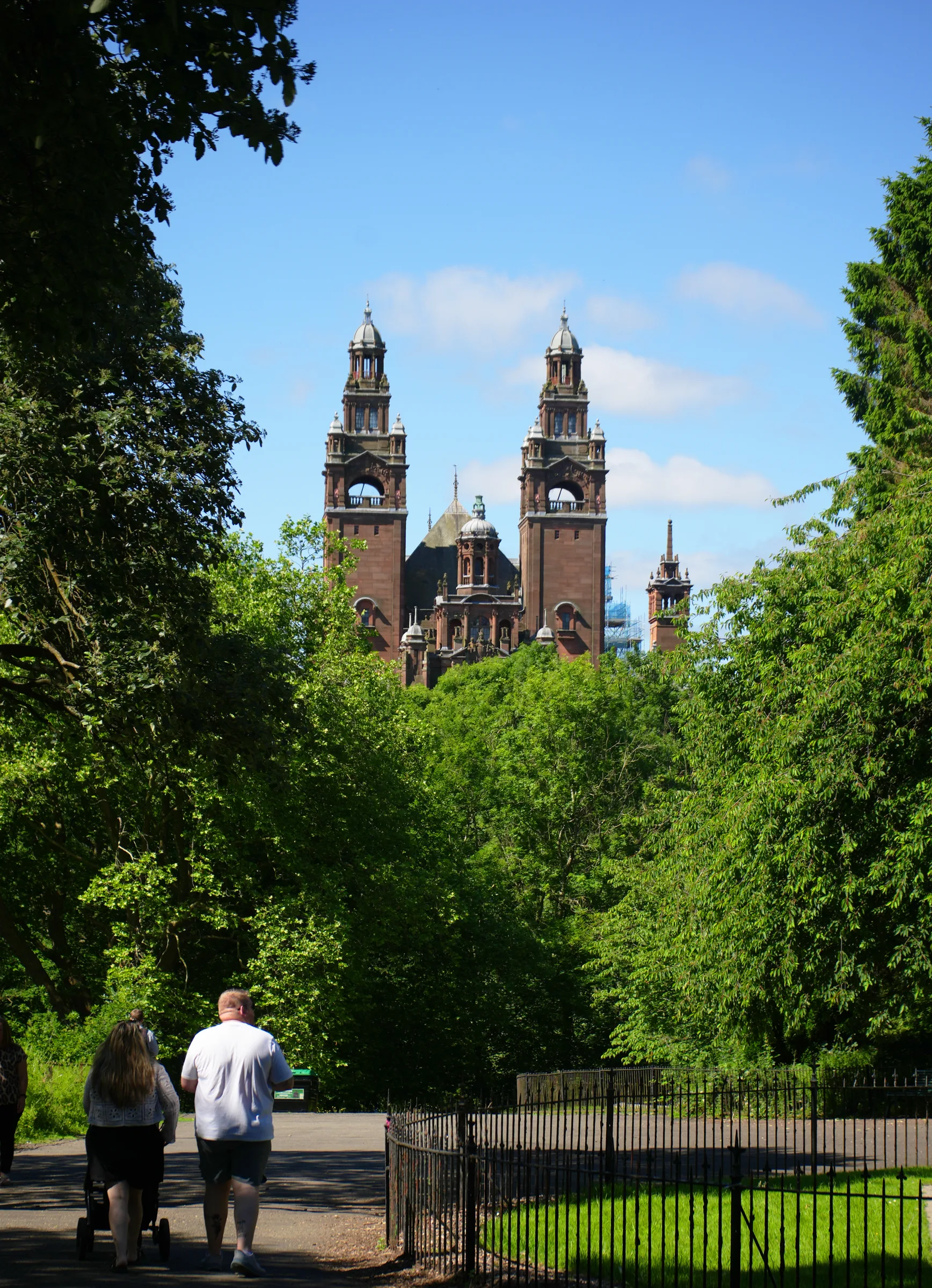
img/About Glasgow.webpWatch the system be right
Same place, three times of day; real footage next to what the system draws for that exact hour. The one lit up is the one happening right now.
The five on the ground
Same five colours, traced against Glasgow itself. Hover or tab to a shape to read the district; click through to its page.
How a mark stays live
The short version, the full breakdown lives in the Tool Kit and the generator.
L1 · Vessel
The district's fixed shape and colour, the same shape the field above assembles into. Never recoloured.
L2 · Shade
A tint that shifts with the real Glasgow hour, so the mark reads morning, midday and night differently.
L3 · Crowd
A dot grid that tightens or loosens with how full the district is right now, simulated on a rush-hour curve.
See the full layer stack, the icon set and the type lab in the Tool Kit →
Where it goes
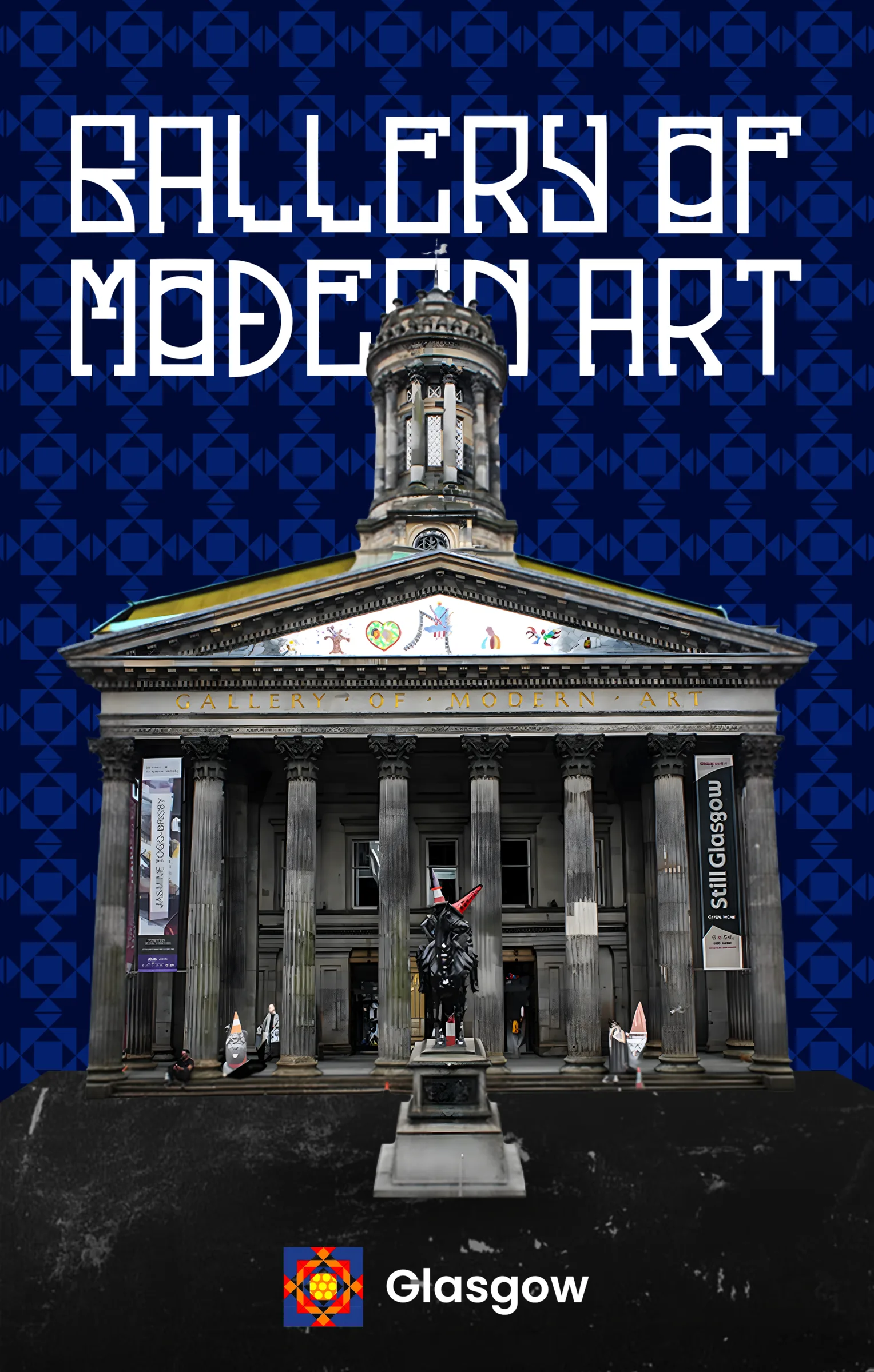
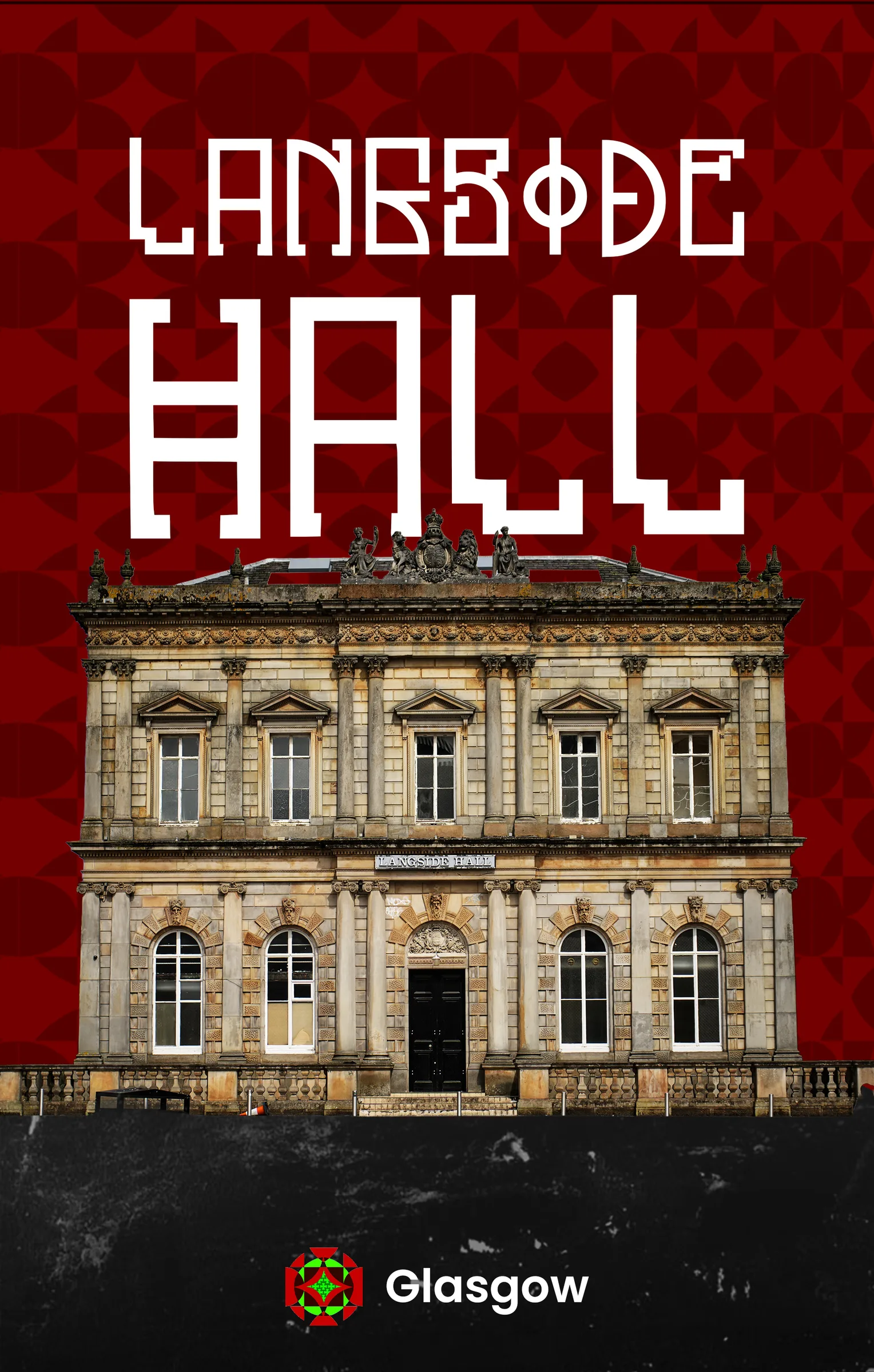
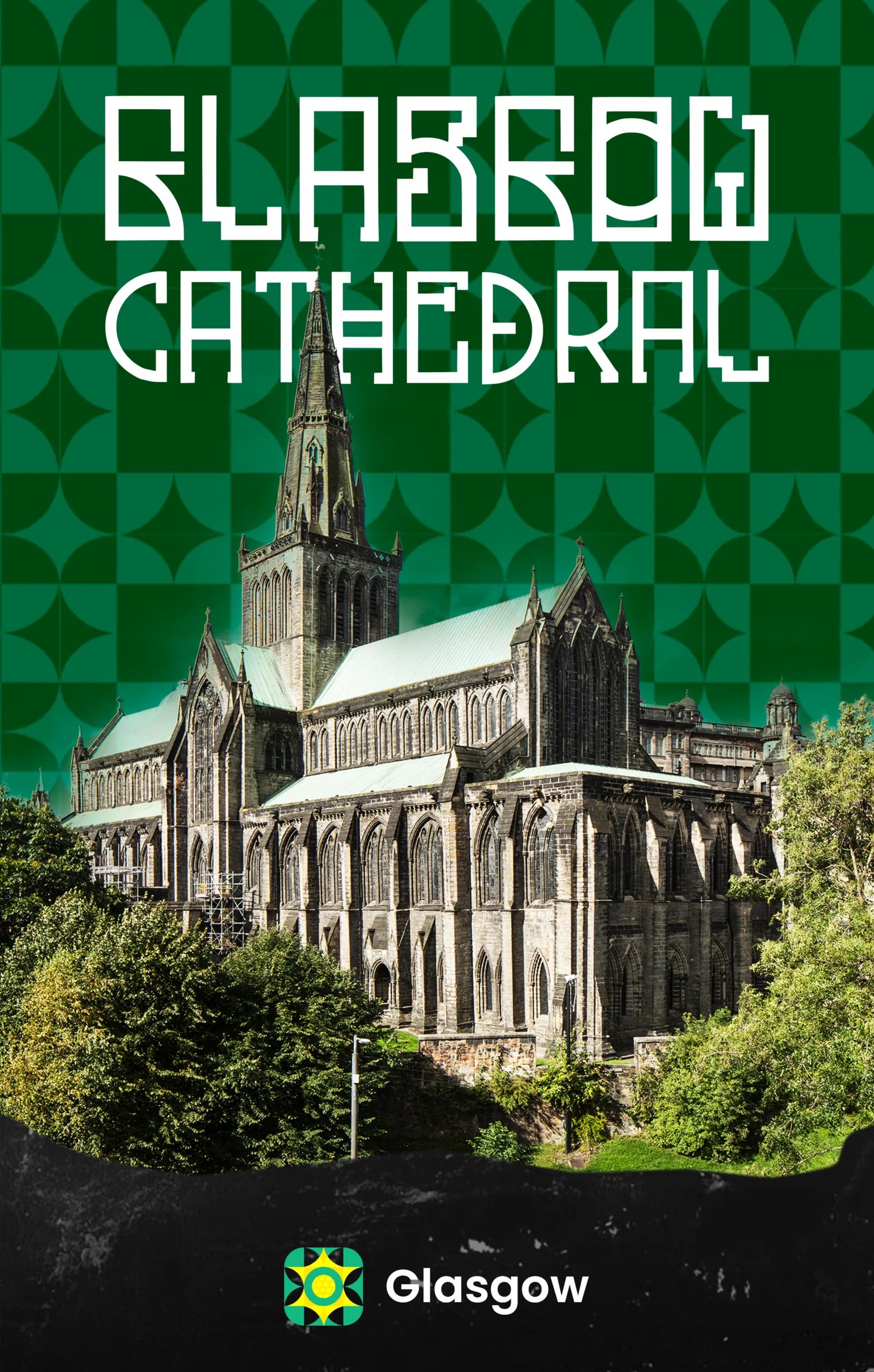
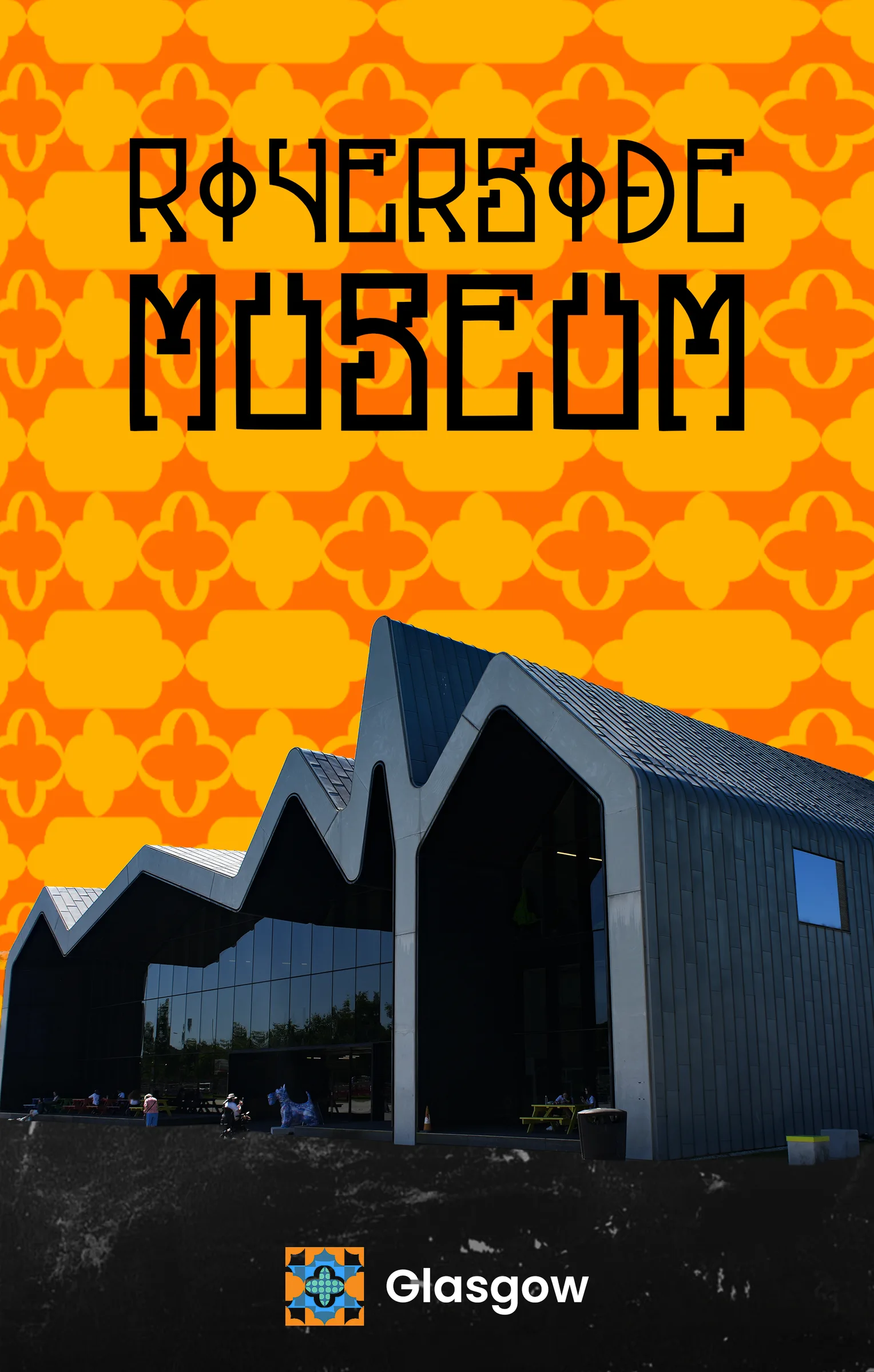
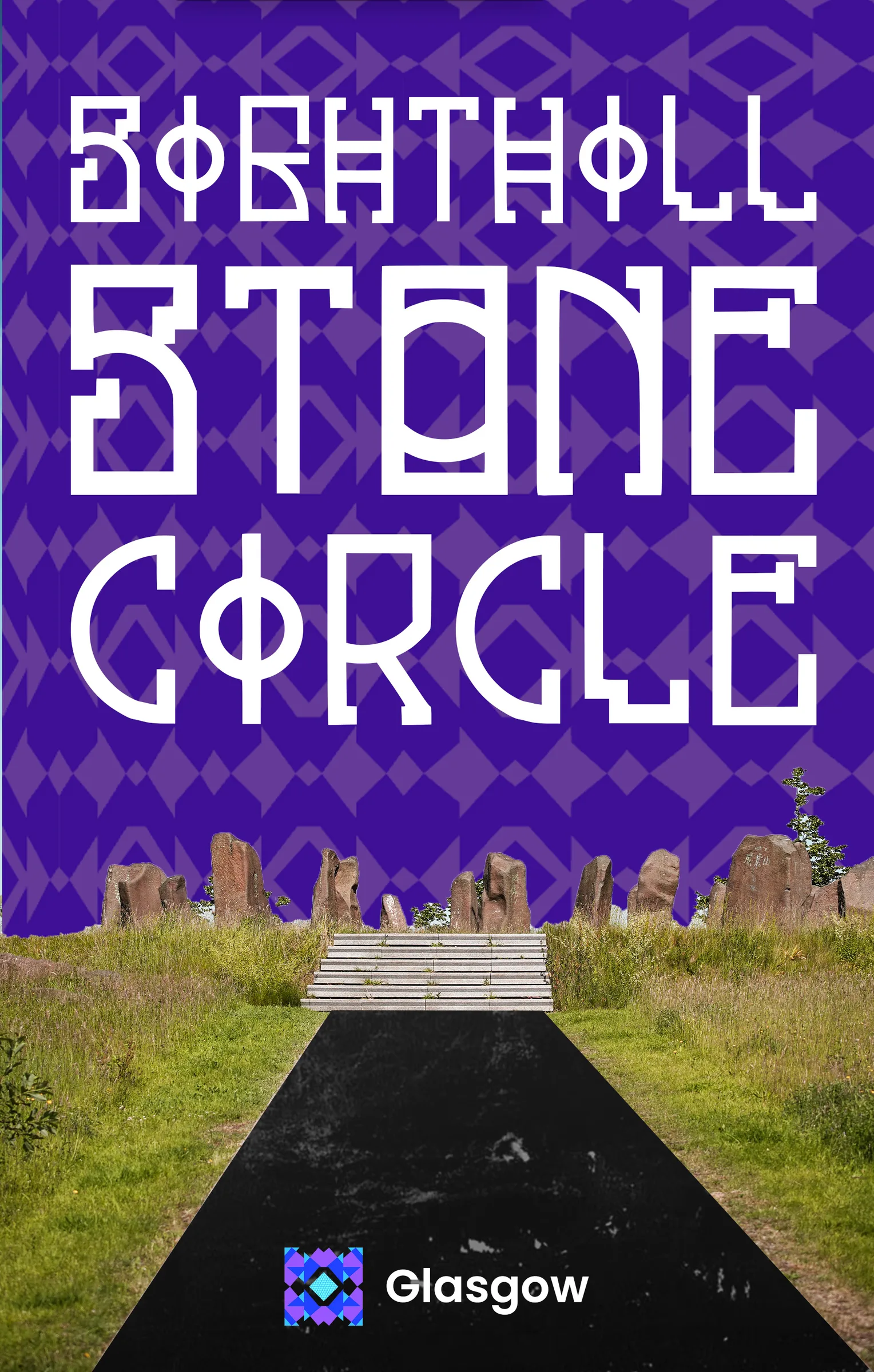
Stills, sequences and video, the same mark sitting on a printed sheet and on a screen without being redrawn.

Colophon
MA Graphic Communication Design, final major project, IN5NITE EXPRESSIONS. Built on Kevin Lynch's urban legibility theory, Keith Dinnie's place branding and Dr. Martin Lorenz's Flexible Visual Systems methodology; the full framework and precedents are in the written report.
| Typeface | Poppins, throughout; 800 for display, 300 italic for the live figures. |
| Display face | Mack Display, the display face referenced in the theoretical framing. Try it → |
| Icons | Phosphor Icons, fill weight. |
| Engine | Vanilla JavaScript, SVG and Canvas. Masks, blend modes, particle physics and an HSL colour ramp; no framework. |
Build one yourself
Pick a district, move the hour, hold a density, switch the layers off one at a time. Export the result as SVG or PNG.